

How to Set Up a Walk-In Closet for Easy Seasonal Wardrobe Swaps
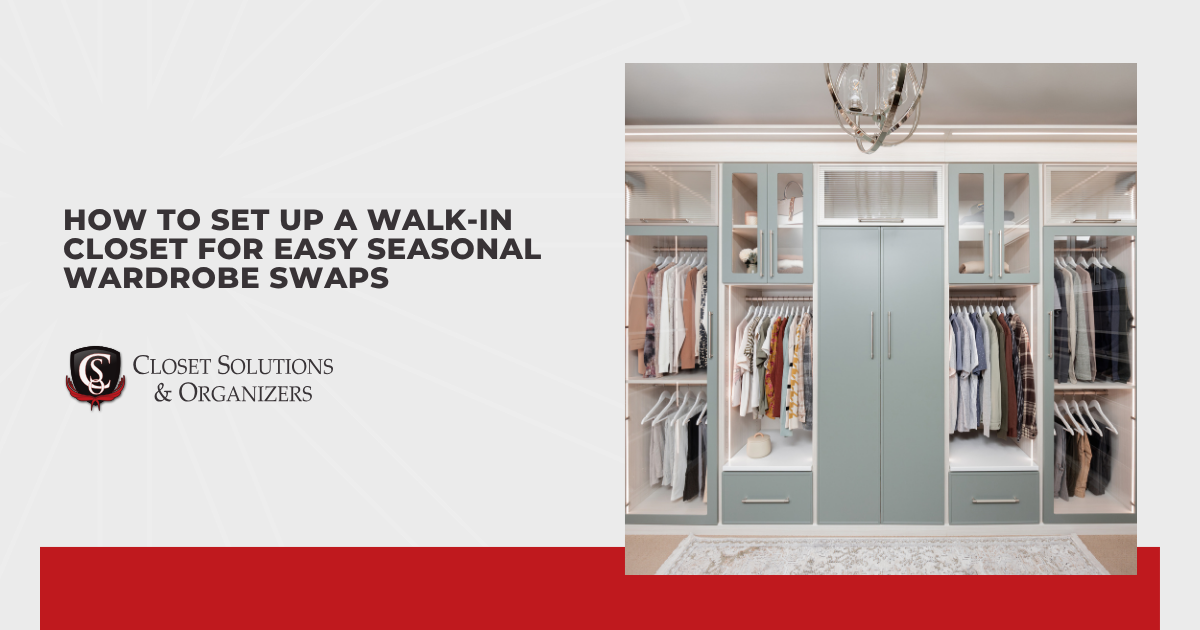
Swapping out your wardrobe with the seasons sounds simple until you're standing in front of a closet that has nowhere to put anything. Winter coats end up crammed next to summer dresses in your closet, and boots take over floor space that should hold your sandals half the year. Most walk-in closets get built with one static layout, never accounting for the fact that your wardrobe actually shifts twice a year. Bulky coats and heavy sweaters are usually the first things I plan around when designing a closet, since out-of-season items eat up more hanging and shelf space than most people expect until I measure it out.
No built-in system for rotation lies at the root of that struggle, leaving you to reinvent your storage every single season. Bins get stacked wherever there's room, off-season clothes take up prime hanging space, and current-season items you actually need get buried underneath everything else. Dedicated zones and the right storage components give every item in your closet a home based on what season it's actually needed. Your seasonal shuffle stops being a scramble once that structure is built into the closet itself.
A handful of specific changes make that structure possible in any walk-in closet:
- Sort clothes by season before you organize
- Set up two distinct zones
- Use vacuum-sealed or labeled bins for off-season storage
- Install adjustable shelving and rods
- Add drawer dividers for small accessories
- Create a rotation schedule
- Keep a donation bin handy during swaps
Walk through these steps, and your next seasonal swap takes an afternoon instead of a weekend.
Sort Clothes by Season Before You Organize
Sorting comes before any bin, shelf, or label gets touched, since organizing a mixed pile of summer and winter clothes only rearranges the mess instead of fixing it. Every jacket, dress, and pair of sandals falls into one of two categories: something worn during the current season, or something waiting for its turn. I see this exact mistake constantly in closets that feel chaotic no matter how much storage gets added. Setting clothes into current-season and off-season piles first gives every later step something solid to build on in any walk-in closet. Skipping that groundwork means adjustable shelving and labeled bins end up organizing clutter instead of eliminating it.
Getting that groundwork right starts with pulling everything out of the closet at once, since sorting item by item while things stay on the rod leads to guesswork. Laying clothes out on a bed or floor lets you see the full scope of what needs a home, rather than missing pieces buried in the back. Items that haven't been worn in over a year during their actual season usually belong in a donation pile rather than either storage zone. My approach always calls for setting aside a full afternoon for this step alone, since rushing it leads to mistakes that show up months later.
Time invested upfront pays off the moment a clear system for separating current-season from off-season items gets put in place. Walk-in closets stay easy to manage long after the initial sort because every future step, from labeling bins to installing shelving, depends on that accuracy. Seasonal transitions stop feeling overwhelming once the sorting habit becomes routine rather than a once-a-year scramble. I tell every client the same thing: skipping straight to bins and shelving without sorting first almost always means redoing the work within a season or two. A closet handles every future swap with far less effort once that first sort gets done right.
Set Up Two Distinct Zones
Prime real estate in your walk-in closet, the eye-level shelves and easiest-to-reach rods, should always go to whatever season you're actually living in right now. Off-season items belong somewhere less convenient, since digging for a snow boot in July or a swimsuit in January just wastes space your current wardrobe needs more. Two zones, clearly separated rather than blended together, keep that priority intact no matter how the seasons shift throughout your year. Higher shelves, a back corner, or even a small dedicated section of rod space can all work for your off-season zone, as long as the boundary between the two stays consistent. Blurring that line defeats the purpose almost immediately, since mixed zones slide right back into the exact clutter this whole process is meant to fix.
Closets with enough square footage can dedicate entire sections to each zone, but even a smaller walk-in closet benefits from splitting things vertically instead of by floor space. I've designed zones as simple as a single high shelf for off-season bins, paired with everything else at standard height for daily wear. Vertical splits work especially well when your floor space runs tight, since height gets used instead of wasted. Color-coded bins or a strip of tape marking a shelf boundary can make your zone split obvious at a glance, which matters more than most people expect once the swap actually happens twice a year.
Sticking to the same two zones every single season, rather than redrawing the lines each time, turns this whole system into muscle memory for your household. Walk-in closets built around a stable zone layout let you swap contents without rethinking the entire setup from scratch. My clients who stick with the same zone boundaries year after year report the fastest, easiest swaps of anyone I've worked with. Your off-season clothes always know where they're going the moment they come out of storage, and your current-season clothes always know where they're headed once their turn ends. Holding that boundary steady every season is what actually makes the zone system pay off long-term for you, more than any specific shelf height or bin color.
Use Vacuum-Sealed or Labeled Bins for Off-Season Storage
Your parka, that stack of wool sweaters, and the comforter you swap in around November take up way more space than they deserve for something you touch four months out of twelve. Vacuum-sealed bags fix that imbalance fast, crushing bulky fabric down to a fraction of its size the moment the air gets pulled out. Moisture and pests stay out too, which matters most for wool and down, since both practically send out invitations to moths if left exposed on an open shelf. Shoes, folded shirts, and anything structured don't compress well, so labeled bins make more sense for those than a vacuum bag ever would. Matching the storage method to what's actually going inside beats forcing everything into one system just because it worked for the first bin.
Labels turn a stack of identical bins into something you can actually navigate without popping the lid on every single one during a swap. Writing the season and general category on each bin, winter sweaters versus winter accessories, for example, saves real time compared to guessing based on where a bin happens to sit. I'd recommend labeling by category rather than by month, since seasons shift earlier or later depending on the year and a rigid date-based label stops making sense fast. Clear bins work well for anything you might need mid-season, letting you see contents without unpacking, while opaque bins with strong labels suit true off-season storage tucked out of daily sight. Consistent labeling across every bin in a walk-in closet turns the whole off-season collection into something searchable instead of a shot in the dark.
Stacking bins safely takes some planning too, since heavier items belong at the bottom no matter how good the labeling looks on top. In my experience, clear, stackable bins with locking lids work best for anything going on a high shelf, since a bin that shifts or pops open mid-stack undoes half the work that went into sorting in the first place. Sturdy, stackable bins protect your off-season wardrobe far better than shopping bags or a loose pile ever could. Extra care at this stage is what separates a swap that takes 20 minutes from one that ends with a sweater covered in dust.
Install Adjustable Shelving and Rods
Fixed shelving locks your walk-in closet into one configuration forever, and that becomes a problem the moment your off-season bins outgrow their shelf. I see this exact problem in older closets built with a single fixed rod and one shelf that never accounted for how much your wardrobe actually shifts. Adjustable rods and shelves solve that rigidity, letting your whole layout shift as your storage needs change with the seasons. A rod that drops lower for your shorter summer dresses can rise back up in the fall to make room for longer coats. Shelves that expand or contract in height work the same way, giving your bulky winter sweaters room to breathe when they need it.
Track systems make these adjustments simple, since most let you unclip a shelf or rod and reposition it along the same track without tools. Rods that adjust in width matter just as much as height, especially when your seasonal bins need a wider rod one month and two narrower rods the next. My take is that closely spaced track holes beat wide gaps, since a few inches of flexibility matters more than you'd expect. Locking mechanisms on adjustable components keep everything stable once you've set a configuration.
Reconfiguring your closet twice a year takes minutes with the right hardware, not a full renovation project. Swapping a rod height or repositioning a shelf bracket becomes routine once your system supports it. Plenty of walk-in closets I've worked on outgrew a static layout within a year or two before adjustable components got added in. Flexibility built into the bones of your closet pays off every single time your wardrobe shifts.
Add Drawer Dividers for Small Accessories
Scarves, gloves, belts, and socks rarely get much thought during a seasonal swap, yet they cause just as much clutter as coats and sweaters when left loose in a drawer. A single drawer without dividers turns into a tangle of mismatched gloves and knotted scarves within a few weeks. Small items shift around every time the drawer opens and closes, so anything sorted neatly one day ends up scrambled by the next. Plenty of the walk-in closets I've helped redesign had this exact issue tucked away in a drawer nobody wanted to deal with. Dividers give every category its own compartment, whether that's a slot for winter gloves or a row for summer sunglasses.
Accessory collections rarely stay the same size from one season to the next, which is where adjustable dividers earn their keep in any walk-in closet. A compartment sized for a handful of scarves in October might need to shrink once winter hats take over that same drawer. I'd lean toward dividers that slide or lock into different widths rather than fixed inserts, since accessories shift in volume more than most people expect. Deep drawers benefit from stacked dividers too, letting lighter summer accessories sit on top of bulkier winter ones without either category getting crushed. Small drawers hold more organized chaos than people assume, once the right dividers are in place.
Off-season accessories deserve the same swap treatment as clothes, moving into bins or a designated drawer section once their season ends. Sunglasses, swim goggles, and sunhats have no business sitting in a drawer through winter when an off-season bin could hold them instead. I've noticed small items get lost far more easily than clothes do, since a missing sock draws far less attention than a missing coat. Sorting accessories with this much care closes one of the last gaps left in a truly organized swap.
Create a Rotation Schedule
Waiting for the weather to turn before swapping your wardrobe usually leaves you scrambling for a sweater during the first cold snap or digging for sandals on the first warm weekend. A set date on your calendar, even a rough one, takes the guesswork out of timing and gets the swap done before the weather forces the issue. I'd point you toward two swaps a year for most climates, one heading into warmer months and one heading into colder ones, though three or four works better if you live somewhere with a longer shoulder season. Picking a date tied to something memorable, a specific holiday weekend or the start of a school break, makes the schedule easier for you to actually remember. Skipping a fixed date usually means the swap happens late, rushed, and right when you need the new season's clothes most.
Setting a reminder somewhere visible matters just as much as picking the date itself, since a mental note rarely survives a busy week. Your phone calendar, a note on the fridge, or a recurring task in whatever planning app you already use daily all work fine as long as you actually notice the reminder. My honest take is that the routine matters more than the reminder, since a swap attached to an existing habit sticks far better than a standalone alert that gets swiped away. A walk-in closet with zones and adjustable components makes your actual swap quick enough that skipping it out of dread stops being a factor.
Sticking to the same schedule every year builds a habit instead of leaving the timing up for debate each season. Treating the swap like any other recurring task on your calendar, laundry day or grocery runs, keeps you far more consistent than winging it based on the weather ever will. Clients with a well-organized walk-in closet tend to stick to their rotation schedule more easily than those working around a cramped or disorganized one. Consistency on the calendar does more for your closet long-term than any single perfectly timed swap ever could.
Keep a Donation Bin Handy During Swaps
Pulling out last season's clothes puts everything you own in front of you at once, which makes it the easiest possible moment to notice what never got worn. A shirt that sat untouched all season, a pair of shoes that never quite fit right, or a jacket you forgot you owned all surface naturally during a swap rather than during a separate decluttering session. Setting a donation bin next to your sorting pile means those items have somewhere to go the second you spot them. Without that bin ready and waiting, unworn clothes usually just go right back into storage for another season of taking up space. I've watched plenty of people rediscover the exact same unworn shirt two or three swaps in a row simply because no donation option existed in the moment.
A simple rule cuts through most of the back-and-forth: anything unworn for a full year through its actual season gets donated instead of stored again. Stains, tears, or a fit that's clearly wrong make the call even easier, since those items rarely get worn no matter how long they sit around. Waiting on a decision almost never works out better than making the call right there during the swap. A walk-in closet with a designated spot for the donation bin keeps this step from turning into extra clutter during the swap itself.
Momentum matters here just as much as the decision to donate in the first place. A bag sitting by the door for weeks defeats the purpose almost entirely, so scheduling the drop-off for the same week as the swap keeps things moving. My suggestion is to treat the donation run as part of the swap itself, not a separate errand that gets pushed off indefinitely. Your closet stays lighter and easier to manage every season once donating becomes a built-in step rather than an afterthought.
Conclusion
A walk-in closet that handles seasonal swaps well comes down to a few core ideas working together: clear zones, flexible storage, and a system for letting go of what no longer fits your life. Sorting first, protecting off-season items properly, and giving small accessories their own space all cut down on the chaos that usually comes with changing seasons. Adjustable shelving and a set schedule turn what used to be a dreaded weekend project into something closer to routine maintenance. Walk-in closets built this way keep working season after season instead of falling apart the moment a wardrobe shifts. The right structure, put in place once, makes every future swap easier instead of harder.

QUICK LINKS
CONTACT INFO
Closet Solutions & Organizers
4332 - 81 Ave Edmonton, AB T6B 2M2, Canada
Phone
SCHEDULE A CONSULTATION
Contact us, and we will come out and discuss your project free of charge.